Photography - Basics.
- Mylo Sayles
- Oct 4, 2022
- 3 min read

Updated: Nov 15, 2022
(Project 1.5)

Taking photos isn't just about pressing a button. There are many factors that need to be considered before taking a photo that will decipher if it will be a good photo or not.
These are things such as:
- Point of Interest
- Angle
- Rule of Thirds
& More..
Point of Interest
The point of interest in an image is an extremely important part because ideally we want an image that has a clear focal point.
This is an example of a photo with a clear point of interest, the duck's head and bill.

This is clear to me because unlike the body, the head is fully in shot, closest to the camera and very clearly in focus.
The duck's head - especially its beak - also stands out from the rest of the components of the photo due to its
yellow colour that stands out from the shades of brown and blue in the photo.
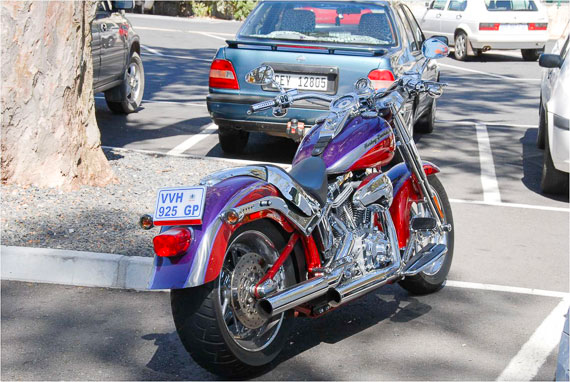
However, In the photo to the left there is a lack of a point of interest.
There are many components in the photo frame and it is very difficult to tell what the main focal point should be.
The fact that the cars and other objects in the background are also in focus takes away from what the implied main point of interest is supposed to be - the bike. The only way we can tell what it was that the photographer meant to be the main focal point is by looking at which object is closer and more in the centre of the image, it is therefore not a very effective photograph.
Angle
Angle is another important factor to consider when wanting to take a good photo. The angle that we take a picture of something at can change its appearance entirely, and getting the right angle or not can make or break a photograph.
Just taking a photo from an angle that anyone would look at something most of the time isn't as effective as getting another angle from a different perspective as it shows the thing you're taking a photo of in a completely different light. It can even change and emphasise things such as mood, size appearance and more.

For example, taking a photo from a low angle can make things appear bigger than they actually are, meaning taking photos from this angle can bring up feelings such as power or emphasise how big and even majestic things such as trees or buildings are compared to us humans, making us feel almost vulnerable or inferior to whatever is in the photo while also admiring it's wonder.
In contrast, taking photos from a high angle can make things appear small.
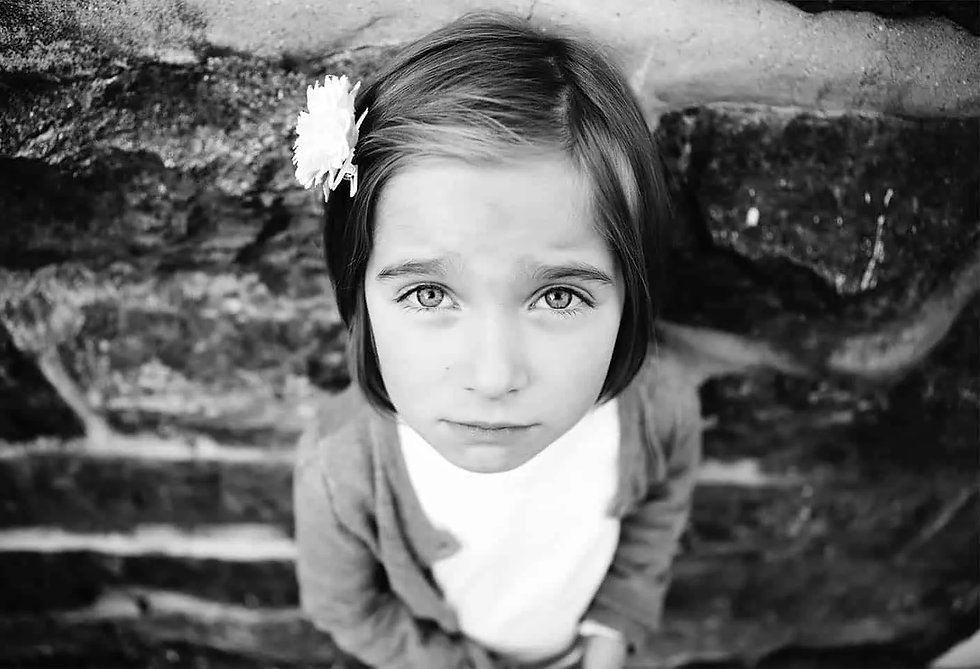
This makes the subject of the photo seem weak, powerless or maybe even scared or inferior which can trigger different emotional responses in people such as feeling sorry for the subject, guilty or maybe superior or more privileged. As a result this camera angle is used a lot in media to get a certain message across.
Rule of Thirds
The rule of thirds in photography is a guideline that places the subject of an image in the left or right third of an image, leaving the other two thirds more open. It divides the frame into nine parts. This is effective when wanting to take photos of a subject among scenery.

The rule of thirds also identifies four 'power points' which allow us to position certain points of interest.
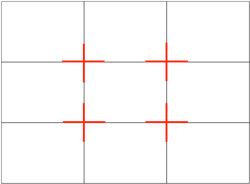
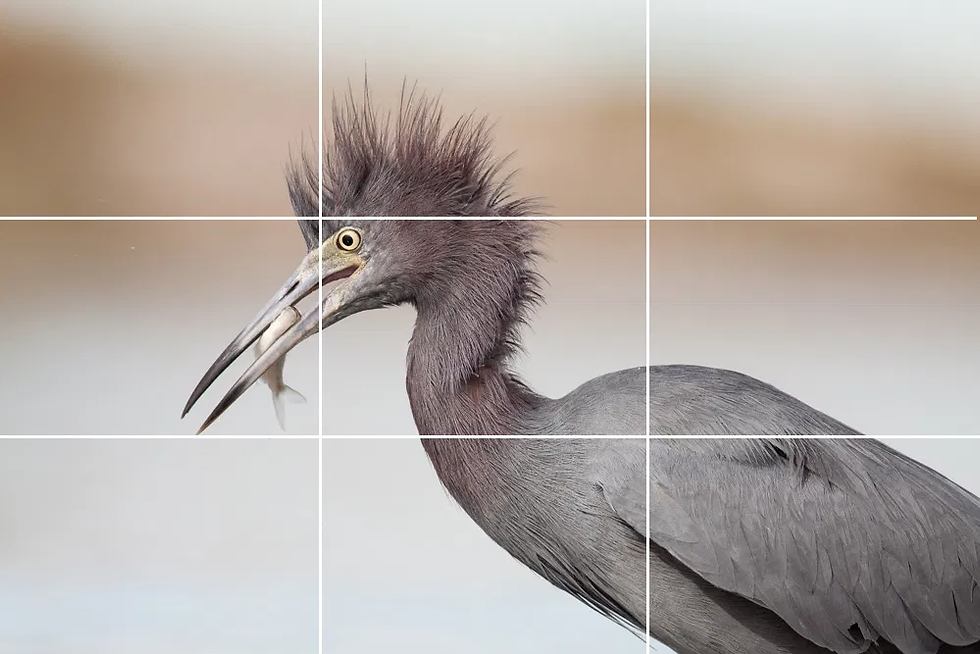
This may be used for example in wildlife photography, where we may line up the subjects eye against or close to a power point to make it a main focus of the image. (See below). Or another example of making use of power points could be the photo of the dog above as its head is aligned with a power point, therefore making it the focus.


Comments