Music Video Types & Analysis.
- Mylo Sayles
- Dec 6, 2022
- 6 min read

Updated: Dec 14, 2022
(Project 4.3)
Types of Music Video.
There are various different types of music videos and depending on the type used, they can all help covey different moods and create a completely different narrative or vibe.
Some of the main types of music videos that you will typically see are: Performance, Narrative, Concept and Lip-sync.
Performance.
Performance based music videos feature the solo artist or band performing to the camera. The goal is to focus on the artists and convey them in a particular way to the audience, there will most likely be singing but also sometimes playing of instruments or dancing. These videos are very common within the rock genre or rock based genres such as punk rock, pop-punk and sometimes alternative genres too.
Narrative.
A narrative music video is a video that has a storyline which is often related to the lyrics. They may sometimes seem like short films or stories that are presented through video and music. Sometimes, the music may be interrupted by a scene where characters are talking or doing something that is significant to the storyline and afterwards the music will begin again.
Concept.
Concept music videos are those that don't have a plot and usually have nothing to do with the lyrics. The concept music video can be viewed as a way for the artist to broaden their creative vision with the song because it is typically based around their ideas.
Lip-sync / Lyrics.
Performers who lip-sync songs pretend to be singing them when in fact they are just moving their lips, however in music videos this isn't a malicious thing and the artist is not trying to trick their audience, they are simply trying to create a video that is more aesthetically and visually pleasing.
'Humility' - Gorillaz Video Analysis.
Here is the music video for the song 'Humility' by the band of animated characters: Gorillaz. The video falls under two of the categories mentioned above and those are lip-sync and concept. This video is unique because instead of using the camera to film the singer and many of the other characters, the background areas are being filmed instead, the singer's character and the rest of the band is animated over the top meaning the people filming had to think more about what shots they needed as there was often no subjects present to film.

In the video, the singer of the band [2-D] is lip-syncing while roller skating around the setting
where the video is filmed.
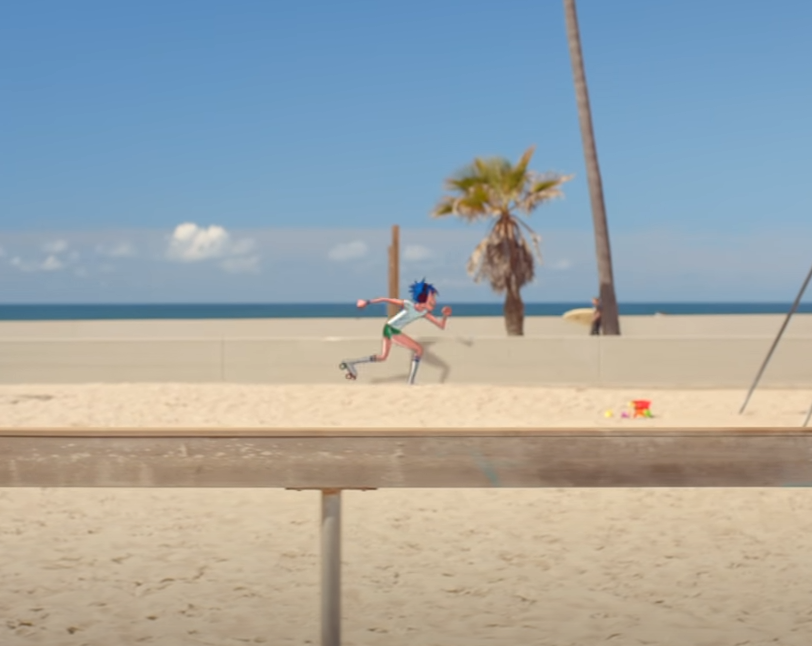
The song is quite relaxed sounding and slow paced therefore so are the shots in most places of the video. There are quite a lot of cuts in different areas however and they become more frequent and faster paced. It seems as if these are used mostly to show the setting, the pace the character is skating at and the people surrounding them more than anything else as the overall vibe of the song matches with the place it is filmed. There are also conventionally many long shots and wide shots for this reason as well.
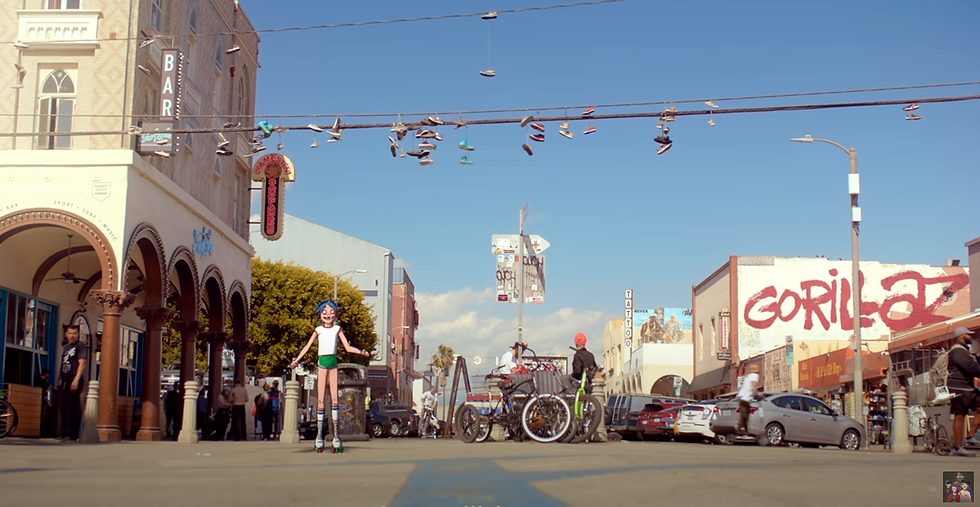
There are also many close up shots that focus on the animated drawings, showing the art and the detail put into the video. This is conventional for most animated media.


This video falls into the 'concept' category of music video as the lyrics don't necessarily have anything to do with the visuals in the video and it doesn't have a specific plot or a storyline.
'11 Minutes' - YUNGBLUD & Halsey Video Analysis.
This is a narrative music video created in collaboration by artists Dominic Harrison - 'YUNGBLUD' and Ashley Frangipane - 'Halsey'. The song also features Travis Barker - former drummer from the band 'Blink-182' and the video is directed by Colin Tilley.
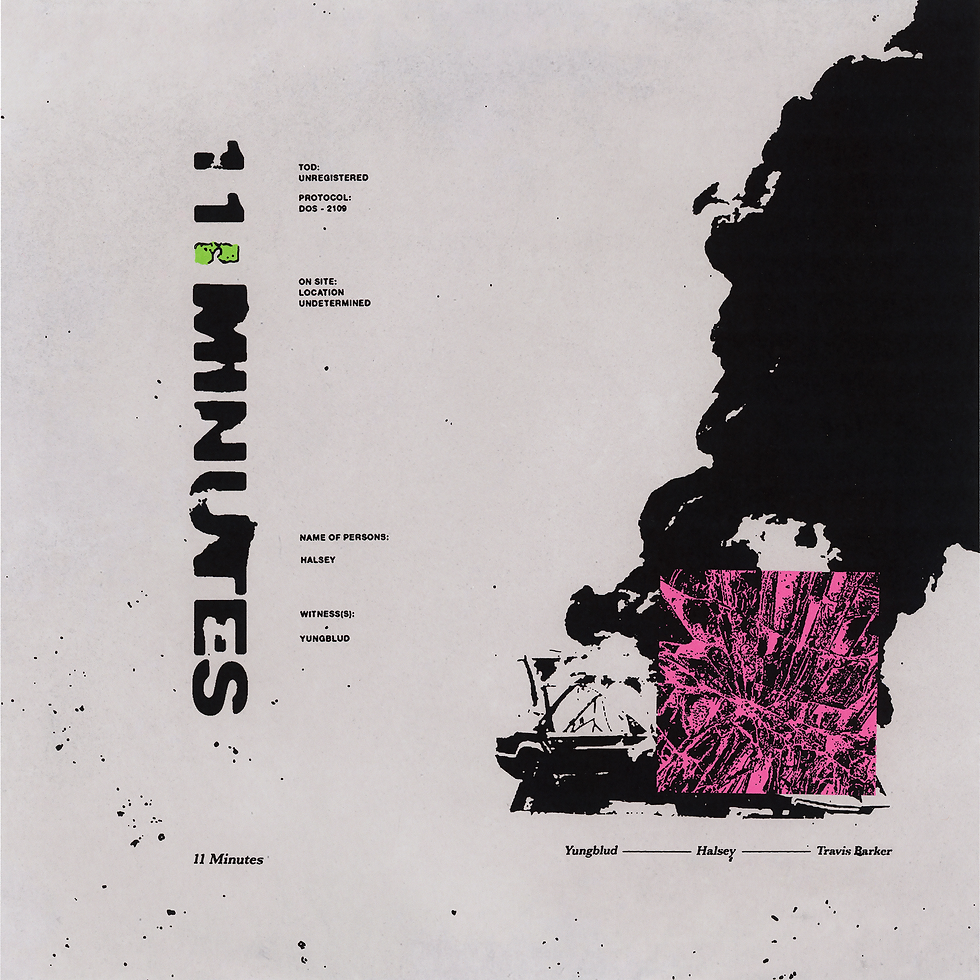
This video consists of scenes that tell a story, the story is about a character whose partner has been in a car crash and passed away. The music video centres around the boy trying over and over again to save his girlfriend from the car crash while going through the stages of grief, however he can't save her because he is too far [11 minutes] away and can't get to her in time. By the end of the video he eventually gets to the stage of acceptance and stops trying to save her as he knows that it's impossible.
There is also lip-syncing in some scenes to show that the characters that the artists are playing are singing from their point of view meaning that the lyrics are related to the storyline playing out in the video.

Above is an example of a shot where one of the characters is lip-syncing. She can be seen on top of a car with an injury to the head, telling the audience that her character is the one that was in the accident. There are also car parts and glass surrounding her in the air.
As seen below, the video is sectioned off into chapters which are named after the five stages of grief - the first being denial. This gives the audience a good idea of what the kind of vibe the song and video is going to give them and what it could be about.

Throughout this video, there are also many codes and conventions. As previously mentioned, the video is separated into chapters that are named after the five stages of grief. Because of this, different coloured lighting is used in each chapter to represent different emotions. As can be seen, the colour green is associated with denial.

The examples below show this too, as the second chapter in the video is about anger. Because typically the colour red is associated with anger, they have used red lighting in this section of the music video.

In this section the character that YUNGBLUD is playing also has extremely aggressive body language and facial expressions which emphasises and provokes more emotion.

The stage after this is bargaining, represented by a more yellow tone.
Yellow often represents hope. In this chapter of the video, the character changes some of the things he did on the way to try and save the girl in the two previous chapters.

In this chapter, the character changes the way he treats the people he runs past, when he runs into a woman while he's rushing he apologises before running away and he also gives a homeless man some money.
These scenes are trying to convey the character's desperation to get to his partner before it's too late. He is trying to bargain with a higher power or a God so that his girlfriend will stay alive.

The stage after this is depression which is conventionally represented with colours such as blue, grey or black. In this video it is represented mostly by the colour blue. There is also lots of sad imagery, facial expressions and body language coded throughout this part.

The emotion can also be heard in the audio of this section in the music video. The song is still playing but extremely muffled. There is also ringing sound effects. These codes combined convey deep and overwhelming negative emotion.
In addition, in this part of the video, YUNGBLUD's character doesn't even get up or go out to try and save his girlfriend at all, this represents deep depression strongly as many will understand that this is one of the symptoms of the mental illness. Other symptoms conventional with depression, such as drinking, are also shown within this chapter.

After this comes chapter five, acceptance, this to begin with is represented with white which contrasts to the muffled and saddening themes in the previous part. It represents clarity and shows that the character now has a clearer head.
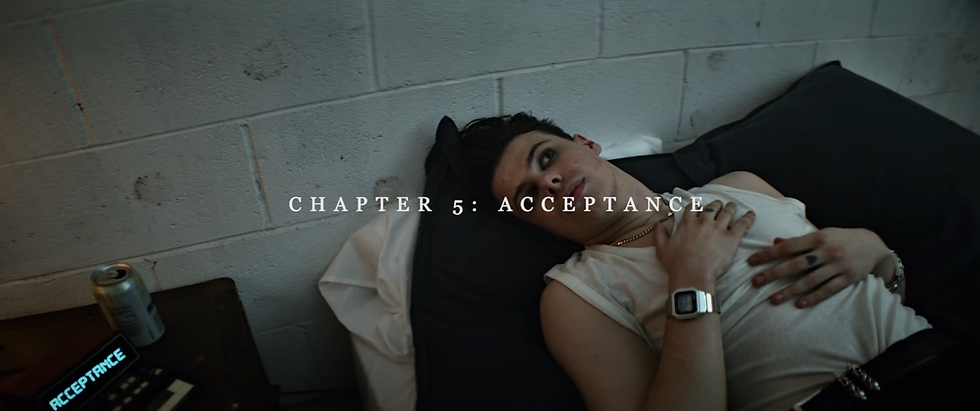
After these shots, the lighting changes to pink. This represents his girlfriend - played by Halsey - and the memories that the two characters have together. This part of the video is showing that he can remember her and be happy that those times happened.

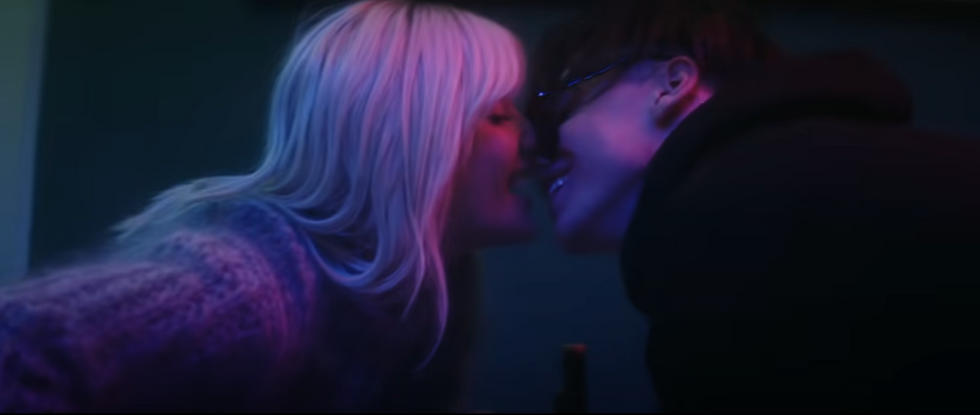
Following this, there are scenes with the coloured lighting from previous chapters. There is also a shot at the end where the lighting in the boy character's room fades into all of the different colours and the last shot shows him laying on his bed with the clear, white lighting. These things together show that the grief and the negative feelings will always be with him even in acceptance but he can learn to move on with happy memories.

In addition to this video falling into two of the above categories, it also falls into the performance category too. With Travis Barker originating from a pop-punk band, it is only fitting for them to include some performance footage in the video too. Here is an example.


Comments