Critical Contextual Awareness In Creative Media.
- Mylo Sayles
- Nov 9, 2022
- 40 min read

Updated: Feb 5, 2023
(Project 3)
Context.
Tick, Tick... BOOM!

The poster of the movie/musical
'Tick, Tick Boom' gives a small amount of context to viewers that have never heard of the story before while catering to its existing audience at the same time.
People who have never heard of the original musical or its creator: Johnathan Larson or the movie's creator: Lin-Manuel Miranda probably would have very little knowledge of what the film will be like when they watch it, however they are able to grasp roughly that it is probably about
the feeling of running out of time. This is easy to grasp when reading the title of the movie on the poster and the question next to the character that states 'How much time do we have to do something great?'
It is obvious however, when looking at this photo however that they are mostly catering to people who know of Larson and Lin-Manuel Miranda's work and are perhaps also fans of other musicals. This can be seen because underneath their names on the poster features the famous musicals the two have written before.
This kind of audience would look at this movie poster and probably get excited and interested because one of their favourite creators has come out with something new.
In addition, if the audience that knows a bit about Johnathan Larson sees that Miranda has created something dedicated to him they will be excited as due to Larson's unfortunate passing in 1996 nothing much has been created from his mind since then which is why the creators of this poster stated that this movie is 'from the mind of' Larson. The addition of Johnathan (Played by Andrew Garfield) next to a piano also draws them in as they know it most likely will be a musical starring Andrew, which is something he has never done before in his career as an actor.
Spider-Man: No Way Home.

This poster holds a sense of mystery that only fans of these movies can really fully appreciate and understand the meaning of.
Without even having to mention or acknowledge yet the fact that Spider-Man is known not to kill but somehow there is a giant billboard calling Spider-Man a murderer in the background of the poster, the fact that the character is standing alone and the title reads 'No Way Home' suggests a lot all by itself as Marvel fans will know that usually characters are not featured alone on their posters. This combined with the title suggests that the film will definitely be emotional for many which allows a great deal of unanswered questions to arise from fans, especially following the previous movie.
Even if a person came across this poster that wasn't very knowledgeable on Marvel or Spider-Man they can still view the poster and feel a sense of mystery and predict that the movie will be intense and interesting.
The creators of this poster (Marvel) don't necessarily have a desperate need to capture a persons perspective from the outside of the fanbase, especially with Spider-Man, as they already have an extremely huge audience with this particular film reaching 1.916 billion USD at the box office with articles reading: 'No Way Home has grossed over $1.92 billion worldwide, surpassing its predecessor as the highest-grossing film released by Sony Pictures.'
Daredevil.

This poster is different to a lot of others in that it doesn't actually feature the title of what it is promoting. This means that the audience would have to be familiar with the character and it's concepts in order to understand what the poster is showing us.
While this seems quite ineffective, it can often have the opposite effect as it stands out from other posters due to these features being abnormal meaning it could capture people's attention.
The features create a kind of sinister and mysterious vibe as there is only a mask placed on the top of a cross and no actual character can be seen.
The strong religious imagery (A cross and a church in the background) in contrast with the intense red and black colours and text reading 'Let there be darkness' used also adds to this vibe.
To the people this poster is most definitely aimed at, the imagery and text still holds some mystery but there is more context. This poster is aimed at fans of the Marvel character 'Daredevil' and the fans will know that the meaning behind the religious imagery being a main focus in the posters design is that Daredevil (Matt Murdock) is Catholic, and him being a superhero contrasts a lot with his beliefs as he has to sometimes hurt people, causing a lot of inner conflict for the character. A poster like this would definitely capture their attention.
In conclusion, context is a really important thing to consider when creating a piece of media because the existing audience needs to be interested but so does the outside audience to some degree, even if small, as this draws in more viewers.
Terminology.
Denotes - What something actually is.
Connotes - What something represents: can have positive or negative connotations.
'The Peace Symbol'

Denotes:
The symbol used by the Campaign of Nuclear Disarmament to identify themselves and their supporters. It was designed by a man named Gerald Holtom in 1958.
Connotes:
Ideas such as peace, love, freedom, positivity, acceptance, pacifism and more.
Rue's Hoodie.

Denotes: A picture of 'Euphoria' character Rue Bennett wearing a red hoodie.
Connotes: In this scene, the character has just lost their father, the hoodie she is wearing used to be her dad's and she wears it throughout the whole show to represent the fact that she is grieving.
The colour of the hoodie is important too because this particular shade of red represents things such as comfort, warmth and security. The creators even described the hoodie as a 'safety blanket' for Rue.
The contrast of the gloomy blue background and the overall sadness the scene radiates and the representation of the hoodie is therefore very effective.
Symbols on Posters.
Iron Man Poster - Arc Reactor.

People that lack the context needed to understand the meaning of the symbol on this poster would only be able to understand what it denotes: a circle that is surrounded by ten trapezium looking shapes however those that have context can understand that it means much more than just a few shapes.
The symbol connotes Iron Man's 'arc-reactor' which is his artificial heart that prevents shrapnel from piercing his actual heart. He cannot live without it. The reactor also powers his suits. It represents his greatest strengths but also his greatest weaknesses in that artificial hearts can come with risks such as rejection.

This symbol, despite it consisting of only eleven simple shapes, represents many of the main aspects and reasons for the entire character of Iron Man / Tony Stark.
The Hunger Games - Mockingjay Pin.

To the left is a poster for the film 'The Hunger Games'. On the poster is a metal pin featuring a mockingjay and an arrow. It is also on fire. This is what the symbol denotes.
What the symbol connotes makes it mean so much more. In the film, main character: Katniss Everdeen volunteers to go into the games instead of her fourteen year old sister who was chosen, Prim. It is made clear from the beginning of the film that Katniss and Prim have an extremely close relationship and before Katniss goes into the games Prim gives the mockingjay pin to her and states that it will keep her safe. This is why the pin is a main feature on the covers of the books, DVDs and posters.
The different elements of the pin have meaning too. The mockingjay symbolises Katniss' rebellion against President Snow, the arrow symbolises Katniss' talent for archery and the fire is used to symbolise Katniss in general as the protagonist, it represents her personality, spirit and temperament.
Importance of Connotations.
The connotations that something holds are extremely important, and it is crucial that connotations are considered while creating a piece of media.
If a person is insensitive or inconsiderate when it comes to connotations it can make whole groups of people and communities become misrepresented and discriminated against. This can cause a mass amount of hate to be directed towards them and one of the reasons for
this is the media, people may see it and think that it is okay to say and do things like this.
Diegetic and non Diegetic Content.
Diegetic - Examples.
'Diegetic' content in a tv show/film is images/sound present in the narrative of the tv show/film. It can occur either on-screen or off-screen, but it will always happen simultaneously with the action on screen. An example could be if a character is standing near a road and we can hear cars passing by it means that the character can hear them too, it is therefore present in the narrative.
An existing example of diegetic content can be any background noise or music that is playing inside the world of the characters [anything that they can hear]. In this scene below, from the Netflix show 'Wednesday', the other characters can hear the main character playing her cello. This is therefore diegetic.

Another instance of diegetic content is
when characters are having a conversation. The characters in the conversation can both hear what one another is saying and, possibly, so can the surrounding/background characters [if there are any present]
such as in the example featured below from 'The End Of The Fxxxing World'.


A final example could be sounds that characters are hearing or listening to, such as in the scene included below from 'Into the Spider-Verse'. He is also singing to himself which is also within the world of the characters and therefore diegetic.
Another instance of this could be like this scene below from 'Euphoria' where the character in the shot and surrounding
characters can hear the siren coming from the police car in the background of the scene.

Non-Diegetic - Examples.
'Non-Diegetic' content is images/sound not present in the narrative of the tv show/film. An example of something non-diegetic could be the soundtrack to a film or show as a soundtrack is more often than not something that the audience can hear and not the characters in the show - unless the character is actually listening to the song playing. The audience can experience these sounds and images however the characters within the show cannot.
Here is one example of non-diegetic content in the film 'Spider-Man: Into The Spider-Verse.'

The character can hear the voice in his head however he cannot see the yellow comic style text boxes they appear in and neither can the other characters in the background, they are purely for the visual art of the movie and the audience.
This film also has a soundtrack which in most cases is non-diegetic unless the character is listening to a specific track.

Soundtracks are often a really effective way of taking storytelling to the next level.
By having music that fits with a movie/show or even character's aesthetic and overall theme, you have the ability to immerse the audience even more into the world you have created.

As previously mentioned, another example of non-diegetic content is sound, however sound doesn't have to appear non-dietetically through only soundtracks. In the Youtube Original series 'Wayne' there are some examples of this.

In the show, a common theme throughout is that sometimes when the main character, Wayne, appears on screen an electric guitar riff will play - The characters in the show cannot hear this, it is just added in for the audience to hear. It also adds effect and gives our character Wayne a specific type of vibe and presence that allows him to stand out from other characters and represents him and his personality very well.
Juxtaposition.
Definition.
Juxtaposition is the fact of two things being seen or placed close together with contrasting effect. A film editing method called juxtaposition mixes two or more shots to generate ideas or thoughts. A montage is a combination of two or more shots, but it most often refers to a combination of several shots to depict a prolonged event or a fixed period of time. It can be for things such as to emphasise emotion, make a concept easier to understand and empathise with, or to create comedic effect and more.
Examples of Juxtaposition in Film - Netflix's 'Sex Education'.
One good example of juxtaposition in film is the contrast between the two characters featured below - Dr. Jean Milburn and Hope Haddon - from the Netflix original show 'Sex Education'.

The contrast between these two characters is most apparent in this scene and setting, where both characters are at the hospital. This is because Jean [to the left] is heavily pregnant, even though she is perimenopausal and her partner has had a vasectomy, whereas Hope [on the right] is relatively young [28], has been trying for a baby for years and is now going through a third round of IVF treatment.
Jean's somewhat miracle and Hope's misfortune surrounding pregnancy and having children contrasting so heavily allows the audience to better understand the different difficulties the characters must be facing. The juxtaposition in this case creates irony and emotion which also helps us to better understand the characters feelings.
How To Train Your Dragon.

Another example of juxtaposition can be found in the animated film: How To Train Your Dragon. In the shot pictured to the left, the dragon [Toothless] comes off as threatening and dangerous.
However, as soon as the boy drops his weapon and Toothless no longer feels threatened, he is quite the opposite to before, which can be seen in the shots featured below.


Demographics.

Demographics are statistics that describe populations and their characteristics. Demographic analysis is the study of a population, based on factors such as age, race, and sex.
Finding The Demographic Of Our Class.
For this part of the unit, each person in the class filled in a table with information about themselves. Afterwards, we gathered the information together in order to tell what the overall conclusion was. Below is both my chart and everyone else's.
Name: Mylo Sayles
Questions | Results |
Age | 16 |
Gender | Male |
Location | Scunthorpe, Bottesford |
Hobbies | Design, Drawing [Digital & Traditional], Writing, Skateboarding, Playing Guitar, Boxing, Cooking, Reading, Photography |
Spent on Hobbies | £2100 |
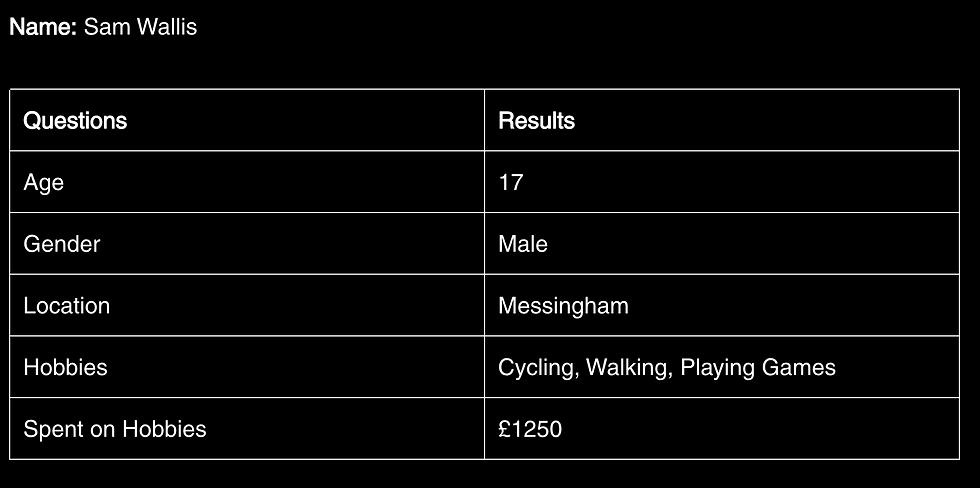


Conclusion.
After having the opportunity to look at all of these tables in one place, there were many conclusions to be found.

Age.
Due to the class being a college course, the age range of the whole group is relatively narrow because typically most of the people in college have just left secondary school. The overall age range goes from age 16 to 18, with 50% of the class being age 16, around 38% being 17 and finally 13% being 18.

Location.
Typically, because the college is located in Scunthorpe, most people that go there are from in and around that area. The furthest away I found that someone lived was in Doncaster, this was the only extremely non typical answer I got from the survey.

Gender.
I found that the majority of the people in the class that did the survey stated that identify as male, only one person said female. This means that around 86% of the people said male.

Hobbies.
I also found that half [50%] of the people that took the survey have gaming as one of their hobbies, making it the most popular hobby among the class. The least popular hobbies were things such as baking, cooking and skateboarding with only one person for each. The person with the most hobbies had a total of eight and the person with the least had only one.
Spent On Hobbies.
The amount of money spent on hobbies varies from person to person. This was the question where it was hardest to find a common theme. Numbers ranged from £400 at lowest to around £2100. Many people also entered 'N/A' for this question either because they don't want to share or they don't know for sure how much has been spent on their hobbies.


Social Class.
Sometimes, when trying to find a demographic of a group of people, the question of which social class people are in is brought up.
In this instance, sharing social classes with others was not something that anybody in this group of people was comfortable with doing and it is completely in their, and anyone's, rights to not want to answer any personal questions like this.
In addition to this, the people taking part in this survey and on this course are 18 and under meaning nobody has really moved out of their parent's homes so they may not know or want to share what their parent's social class is.

Despite this, here is a simplified triangle diagram explaining what the different social classes are and what they mean.

Poster Task - Describing and Comparing Hypodermic Theory and Uses and Gratifications Theory.
What is Hypodermic Theory?
Hypodermic Theory in media implies that the media directly injects its messages into the passive audience. These communications have an instant effect on this audience. The people can't really avoid the media's effect. These messages are almost subliminal. It has a direct and impactful effect on viewers.

An example of use of the theory can be found in many television adverts, lots of them have a trademark mascot [eg. the example on the left] or typical or seemingly random imagery in their commercials to get the audience to subconsciously remember them.
The advert here: https://www.youtube.com/watch?v=JRnRBEspmwg is an example of this. There is random imagery constantly popping up to keep the audience engaged and focussed on the media, such as the hippo or the leprechaun
What is Uses and Gratifications Theory?
The Needs, Motives, and Gratifications of Media Users are the main themes of the Uses and Gratifications Theory, a Mass Communication theory.
According to the thesis, those who consume media don't just passively ingest mass communications; they actively participate in it.
It was found that the four main reasons people use media are:
Information.
Personal Identity.
Integration and Social Interaction.
Entertainment.

For example a TV show has things that need to be included in order to meet the satisfaction of the viewers: The need to be entertained - putting the characters into interesting scenarios with other characters or interesting situations or having a problem that needs to be dealt with.
Another thing that is crucial is giving the audience the ability to relate to characters by researching what their typical audience would be for the type of show or piece of media they are creating and then creating personalities and likable characters out of this.
My conclusion to this research is that both of these theories are quite different and contrast because Hypodermic Theory is centred more around subliminally engaging the audience while Uses and Gratifications Theory focuses on engaging the audience by creating an interesting story or piece of media based on their research and identifying what their audience feels that they need to get from the media being created.
After completing this research, I was now ready to start designing a poster.
Final Poster Design.

Codes and Conventions.
Codes.
Codes are the signs - visual and audio cues - that create meaning. They are represented in things such as camerawork, lighting and audio. There are different types of code within media these types are:
- Linguistic: A linguistic code is where language is used in media, either spoken or printed.
- Visual: A visual code - sometimes referred to as a symbolic code - mean things that are shown. They are the things that we can see.
- Audio: An audio code - also a type of symbolic code - is something we can hear, it could be dialogue, music or sounds.
- Technical: A technical code refers to the technology equipment that has been used to create the product.
Learn more about Technical and Symbolic codes in my blog titled:
'Semiotics & Codes and Conventions'
Conventions.
Conventions are things that are common in media, therefore we associate certain things with certain emotions, genres, ideas and more. Conventions are shown in things such as camerawork, lighting and audio too. For example, in a horror film we often expect to hear creepy or off putting sounding music and audio, we expect this audio to contain dissonant sounds that make us feel uncomfortable.
Example.
Below is an example of the codes and conventions I found when looking for them in a film of my choice.
Into the Spider-Verse - Codes and Conventions.
Linguistic Codes.
One of the more obvious examples of a linguistic code in this movie is the typical speech and dialogue between characters.

A better example however is featured to the right. Because this movie was created to be like 'a moving comic book', there are sometimes words that pop up when a character is in a battle or making sound like how they are drawn in a comic book.
This is a typical and conventional way of illustrating in comic books so would be expected in a film that is trying to go with a style like this.
Visual Codes.

An example of a visual code in 'Into the Spider-Verse' is the 'spider sense' visuals. When the wiggly lines appear around the characters head, it means that they are sensing danger.
This paired with the pointy lines that surround the edges of the frame mean that something intense and action packed is about to happen.

Audio Codes.

A good example of audio codes in this, and any, action film is intense music before danger or a battle, In this film and many other films created by Marvel - and other companies that make superhero films - supervillains have their own 'theme' featured in the soundtrack.
In 'Into the Spider-Verse', the villain 'The Prowler' has his own theme, it lets the audience know that there is danger and it creates suspense and anticipation. The sounds featured in the theme tune are loud, sudden and dramatic, like most villain themes are.

Technical Codes.
With this being a film completely created and animated digitally, the technical codes are constant. There is 3D modelling involved, digital drawing, CGI and more.
Symbolic Codes.

An example of symbolic code in this film could be the frames per second that the characters are animated at, making the animation look more choppy and like a moving comic. The main character of this film - Miles Morales - has a lower frame rate at the beginning of the film to at the end.
His frame rate increases as the film goes on, symbolising him finding himself more and more. By the end of the film, Miles is moving at 24 frames per second.
Other Character and Narrative Conventions.
In this film, the conventions of Spider-Mans origin story are constantly mentioned - due to there being multiple 'Spider-People' - as if to poke fun at the amount of times it has been gone over in other Spider-Man films. This is done by each spider character saying the phrase "Alright, let's do this one last time..." before jumping into telling us yet another typical and conventional Spider-Man origin story. They make a joke out of how similar each story is many times throughout the film by saying it is the last time, yet it probably never will be!
Semiotics in Design.
Designers use semiotics: symbols, index and icons to convey meaning and must be aware of what symbols come to mean, as their meanings can change over time.
There are three different types of sign and these are mentioned also above and they are:

Symbols - A sign with a conventional relation to the thing being signified. As people we agree that the signifier and signified should be linked even though there isn't an obvious link. For example the Wi-Fi symbol pictured to the right.
Index - A sign which implies some other object or event. For example, we know that smoke is a sign of fire - or that dark clouds are a sign of rain.
Icons - A sign that physically resembles the thing it represents. It looks like the thing being symbolised.
The Treachery of Images - Rene Magritte.

Belgian surrealist artist René Magritte created the 1929 painting titled The Treachery of Images . It is also known as 'This Is Not a Pipe'. It was painted by Magritte when he was thirty years old. The Los Angeles County Museum of Art now has it on display.
A pipe can be seen in the painting. "Ceci n'est pas une pipe" - which translates to "This is not a pipe" - is written beneath it. The painting confuses people at first as its semiotics and signs all point to the fact that it is a pipe. The thought a person immediately experiences is ''But it is a pipe!'' due to there literally being an icon of a pipe on the page, but that is all that it is. it isn't actually a pipe - it is a painting of one and an icon of one. The painter himself stated that if he wrote underneath "This is a pipe." he'd be completely lying.
Symbols, Icons and Index in Posters.

Avengers.
This Avengers poster to the right contains both icons and symbols. The third sign from the left is Iron Man's icon. It is an icon because it is literally a picture of his face.
In addition to this, all of the silhouettes above the signs could be classed as icons.
Some of the signs - such as Hawkeye and Black Widow's - are symbols. They are symbols because they don't actually represent the character at all and have to be learned culturally.
The rest of the signs are index because while they don't literally picture the character, they picture aspects of the character that are associated with them.
The colours used as well as the image itself are also a big part of getting out brains to associate. For example the green fist that represents Hulk, if the fist was another colour the ability to associate it with the character would be gone. Things such as Captain America's shield and Thor's hammer are Index because they directly represent some of the main parts of the character.
Spider-Man.

The poster to the left is of Spider-Man. Most people know this because it has been culturally learned that these are Spider-Man's eyes however, without this knowledge, they are just two shapes on a red background.
This is why this is classed as a symbol and not an index or an icon.

On the other Spider-Man poster to the right,
there are both symbols and icons.
The icons are the literal characters and silhouette illustrations on the poster and the symbols are the eyes that can be seen either side faded into the background, the spider symbol in the middle and the webs surrounding it.
Semiotics in Film.
Semiotics are the study of signs and symbols and their use or interpretation. In film semiotics include things such as: Setting, Sound, Camerawork, Editing etc.
In this clip from 'Tick, Tick Boom!' - like any other film clip - semiotics can be spotted throughout.

Here is a link to watch the specific scene on Youtube:
https://www.youtube.com/watch?v=BGIc8kb7dAA
Setting.
This part of the film/musical is a song mostly about the setting that our main character [Johnathan Larson] lives in. Therefore the setting is a big part in this section of the movie. When Johnathan is singing and describing the setting around him, he is almost showing the audience around. He is singing about his 'bohemian' lifestyle so there are props and things in the background/room that help to convey this, for example the falling bookshelf, the faulty lightbulb and the small rooms. There are also lots of people living at the accommodation [also mentioned in the song] so there are lots of actors playing different background characters on set.
Sound.
This part of the film is one of the musical numbers where Johnathan is singing, so for this reason, the sound is focused almost completely on Johnathan's voice, while he is singing there is very limited background noise so that the audience can focus on it the most.
Camerawork.
Again, like the sound, the camera is almost completely focused on Johnathan throughout this scene as he is the one preforming and singing. It also partly focuses on the setting as mentioned before when Johnathan is describing it in his song and walking around the living space to show the audience. The angles used are also interesting because they are the way that they are because Johnathan is very expressive when it comes to his body language when preforming so a lot of the angles show his full body - these wide shots are also useful because of the setting. It shows both Johnathan's dancing and body language and the surroundings too which fully shows the audience everything they need to see in relation to what the song is about.
Editing.
The scene, as previously mentioned, is edited in a way that it mostly focuses on Johnathan and what he is singing about. However it also is edited in a way where when Johnathan is singing about specific people in his song and when he gestures towards them, it cuts to a shot of the people he is talking about. He is still singing over these clips [J and L cuts] even though he cannot be seen on screen as this is a musical number of his.
Audience Research Agencies Worksheet.
Visit the following websites:

Questions.
1. How does each agency describe itself and what it does? Write a brief outline of each.
BARB - www.barb.co.uk
The UK's television audience ratings are provided by BARB, which was founded by the major players in the country's broadcast and advertising industries. Broadcasters, agencies, and advertisers have worked together in the governance of BARB since its founding in 1981 to accomplish three key goals. Their goals are listed and quoted below.
'Our viewing figures support decisions that are made in the making and distribution of television programmes.'
'Our data inform the ongoing conversation about how broadcasters operate in the public interest and in accordance with prevailing legislation.'
'Advertisers, agencies and broadcasters use our data to support the planning and buying of advertising campaigns, and to assess the brand and sales outcomes of these campaigns.'
RAJAR - www.rajar.co.uk
Radio Joint Audience Research Ltd. [RAJAR] was founded in 1992 with the goal of coordinating, designing, and operating a single audience measuring system for the UK radio industry serving both the BBC as well as other licensed commercial stations.
They say:
'Whilst the Board’s focus is on strategy, governance and decisions of policy, more detailed technical research matters, and where relevant, decision-making, takes place at the meetings of a Technical Management Group (TMG). This group is made up of representatives of the BBC, commercial radio and the advertising community'
ABC - www.abc.org.uk
For the purpose of selling print, digital, and event advertising, ABC makes data available to the UK media sector. They are also a top-tier, industry-owned media products and services auditor with expertise in digital ad trading.
Gallup - www.gallup.com
Gallup is a global analytics and consulting firm that assists organisations in finding solutions to their most pressing issues. They say that their purpose is to use their knowledge to create transformation they say: 'We know more about the will of employees, customers, students and citizens than anyone in the world' and 'We know what matters most to them at work and in life and how those priorities change over time'
YouGov - www.yougov.co.uk
YouGov are an international research data and analytics group headquartered in London.
'At the heart of our company is a global online community, where millions of people and thousands of political, cultural and commercial organisations engage in a continuous conversation about their beliefs, behaviours and brands'
Ipsos - www.ipsos-mori.com
Ipsos is a global leader in market research. They deliver reliable information and allow true understanding of society, markets and people. Their headquarters are located in Paris.
At Ipsos, they think that their clients deserve more than just a data provider; they require a partner who can generate precise and relevant information and convert it into facts that can be put to use. They say that in addition to offering the most accurate measurement, their passionately curious experts also shape it to offer: True Understanding of Society, Markets, and People...
'To do this we use the best of science, technology and know-how and apply the principles of security, simplicity, speed and substance to everything we do. So that our clients can act faster, smarter and bolder'
2. Who does each agency work for and how are they funded?
BARB - www.barb.co.uk
BARB is owned by BBC, Channel 4, Channel 5, IPA, ITV, Sky and UKTV.
RAJAR - www.rajar.co.uk
RAJAR is jointly owned by the BBC and the RadioCentre.
ABC - www.abc.org.uk
ABC is owned and developed by the 'Media Industry'
Gallup - www.gallup.com
Gallup is a private, employee-owned company based in Washington, D.C. Its headquarters is located at The Gallup Building. It maintains between 30 and 40 offices globally, including offices at the Gallup Riverfront Campus in Omaha, Nebraska, and has about 2,000 employees. Jon Clifton is Gallup's CEO.
YouGov - www.yougov.co.uk
Stephan Adrian Shakespeare is the German-British co-founder and Chief Executive Officer (CEO) of the British Internet-based market research and opinion polls company YouGov.
Ipsos - www.ipsos-mori.com
The CEO of Ipsos is Kelly Beaver and their headquarters is located in London.
3. What reasons do they give for collecting audience figures?
BARB - www.barb.co.uk
BARB does not measure viewing undertaken outside of residential households. Visitors to panel households are asked to record their viewing. This is known as guest viewing. Guests are asked to provide details of their sex and age group via the Peoplemeter handset. The reason for this is to collect statistics on the viewing habits of TV and cable audiences.
RAJAR - www.rajar.co.uk
Like most surveys RAJAR uses a sample of people to represent the views of the nation. This sample is selected very carefully so that it is as representative as possible in terms of geography - where people live - and demography - meaning people's age, gender, ethnicity etc.
ABC - www.abc.org.uk
ABC says:
'The purpose of our data is to provide media buyers with verified, comparable facts and figures they can trust when planning and trading advertising.' This information enables them to determine market demand for, and the potential reach of, different media products.
Gallup - www.gallup.com
Gallup use polls which aim to represent the opinions of a sample of people representing the same opinions that would be obtained if it were possible to interview everyone in a given country. The majority of Gallup surveys in the U.S. are based on interviews conducted by landline and cellular telephones.
YouGov - www.yougov.co.uk
The vast majority of YouGov's commercial work, including all nationally and regionally representative research, is conducted online using a technique called Active Sampling. The quality of the sample is always more important than the sheer number of respondents.
Restrictions are implemented when using Active Sampling to make sure that only those contacted are permitted to participate. This means that YouGov will have chosen every respondent who completes a survey from its panel of registered users, and only those chosen from this panel are permitted to participate in the survey.
Ipsos - www.ipsos-mori.com
At Ipsos, their data feeds into decisions on how best to maximise the appeal of video content to an audience and how to promote specific programmes to high potential viewers. In addition, the data is used for trading advertising inventory between marketers, media agencies and media companies.
4. How relevant do you think their work is to media producers?
BARB - www.barb.co.uk
I think that BARB's work is extremely important and relevant to media producers because their data helps them to plan. As mentioned earlier on in this section of the blog: advertisers, agencies and broadcasters use BARB's data to support the planning and buying of advertising campaigns, meaning that they use the data in order to see if they are putting their time and money into the correct things. Their viewing figures support decisions that are made in the making and distribution of television programmes.
RAJAR - www.rajar.co.uk
I also think that RAJAR is relevant to media producers because they are in charge of coordinating, designing, and operating a single audience measuring system for the UK radio industry serving both the BBC as well as other licensed commercial stations. This is clearly very useful to the BBC etc. because these stations are some of the most popular in the UK as they have the ability to connect with their audience well due to this research.
ABC - www.abc.org.uk
ABC is relevant to producers due to similar reasons as to why BARB is useful, because as mentioned previously - the purpose of their data is 'to provide media buyers with verified, comparable facts and figures they can trust when planning and trading advertising.' This helps when planning ahead with things such as time and money.
Gallup - www.gallup.com
I think that Gallup is relevant to producers as it measures audience, and claims to 'assist organisations with their most pressing issues'. Gallup also claims to be the best in the world when it comes to knowledge about the will of employees, customers, students and citizens and understand that priorities change over time. Overall, from my research this company seems to prioritise helping people weather that is organisations that they work with or consumers.
YouGov - www.yougov.co.uk
YouGov claims to 'support and improve' a wide range of marketing activities of a customer base including media owners, brands and media agencies. They also have a global online community where people directly share their opinions and experiences, this most likely comes in useful to producers but seems like it also is good for consumers as they can get involved and start open conversations about their opinions, thoughts, feelings and more
Ipsos - www.ipsos-mori.com
Ipsos' research feeds into decisions on how best to maximise the appeal of video content to an audience. This is relevant to media producers as this would help them a great deal when it comes to gaining an audience and gaining profit.
5. Do you think they are also beneficial to the consumer, and how?
BARB - www.barb.co.uk
I think that BARB is useful in a way to the consumer because they do research to see what would appeal to an audience the most. This is obviously beneficial as the majority of the audience is therefore getting what they want from the piece of media.
RAJAR - www.rajar.co.uk
RAJAR, similarly to BARB is useful to consumers because they are an audience measuring system for UK radio stations and by measuring this they are beneficial to consumers by figuring out what people most like to listen to when it comes to stations, topics, genres. They also serve some of the most popular and most listened to radio stations such as the BBC
ABC - www.abc.org.uk
Also similar to the two answers above, ABC work more closely with helping organisations however are useful to consumers because they make sure that proper research and planning goes into creating the media we love.
Gallup - www.gallup.com
As mentioned on the previous question, Gallup seems to understand and care for the consumers needs and wants when it comes to media. However, one thing I noticed was that the questions are asked in the form of an interview over telephone or landline and especially now - 2023 - many people will not answer calls from unknown numbers due to things such as scams, or they may not answer due to the fact that telephone calls aren't often the preferred method of communication by many. In addition to this, not many people these days have a landline or a house phone.
YouGov - www.yougov.co.uk
I would argue that perhaps YouGov is one of the most beneficial and audience engaging agencies as it is - as mentioned before - good for consumers as they can get involved and start open conversations about their opinions, thoughts, feelings and more. This is beneficial as people like to be and feel heard.
Ipsos - www.ipsos-mori.com
Again, Ipsos' research feeds into the knowledge on how to maximise audience appeal which is therefore useful to both organisations and consumers as the audience gets an end product they are satisfied and organisations will benefit from this.
Film Narrative.
Structure.

When it comes to creating structure in film or shows, something called 'Freytag's Pyramid' is commonly followed and referenced. Freytag's Pyramid is designed to capture and keep the viewer's attention. This model is also useful to writers and authors when coming up with a story.
Plot vs Storyline.
Many people get confused when it comes to defining the terms plot and storyline/narrative as originally they believe they are the same thing, however these two terms have completely different definitions.
A storyline/narrative is the structure and order of the events taking place in the story whereas the plot defines the sum of the events that have taken place.
'The Amazing Spider-Man'
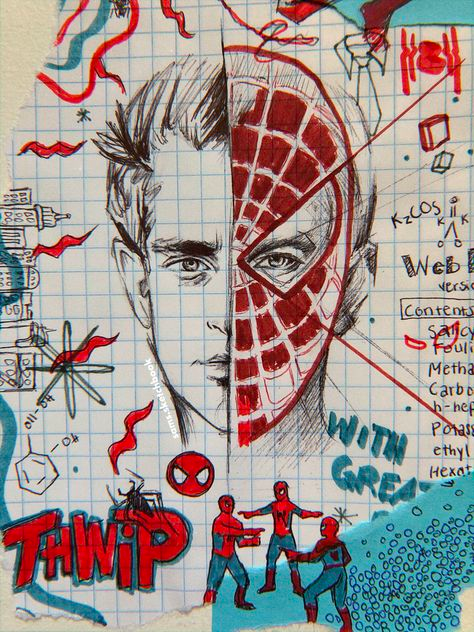
For this part of the blog I am going to sum up this film and put it into the Freytag's Pyramid model. I am also going to differentiate the film's plot and its storyline.
Freytag's Pyramid - Storyline.
- Exposition: This is the beginning of the story, this part of the film establishes our hero - Spider-Man or Peter Parker's -backstory. We start with a relatively intense flashback about where his parents took off to when he was younger. This establishes a setting by telling us that Peter is living with his Aunt and Uncle and also tells the audience that the story is going to have something to do with this event.
- Inciting Incident: the inciting incident is an event that occurs, in relation to the protagonist, near to the beginning of your story, which sets that story moving in a different direction. In this case, like most superhero films, our inciting incident is when Peter gets his powers and gets bitten by a radioactive spider. There is also an additional incident that falls into this section which is the scene where Peter's Uncle Ben is shot in the street. After these two events, Peter begins his journey into becoming and getting used to being Spider-Man and tries to use his powers to track down the man that shot his Uncle Ben.
- Rising Action: There is then however another turn of events when our villain, 'The Lizard' attacks on the bridge. Peter has to save the people on the bridge and the villain runs away, loose in New York City. The viewers now know that the film is going to be building up to fighting The Lizard. After this Peter goes on to uncover The Lizards secret identity and his plans to turn the whole city into monstrous reptiles like himself and take over. Peter goes to the police for help however finds that the chief - Captain George Stacy, father of Peter's love interest, Gwen Stacy - of police does not understand that Spider-Man is trying to help them and he puts out an arrest warrant for both Spider-Man and The Lizard.
- Climax: The long awaited boss battle, Peter is arrested on his way to try and stop the enemy however George Stacy unmasks him and finds out it is Peter who is dating his daughter, Gwen so he lets Peter go. Peter fights The Lizard alongside George and manages to create an antidote to cast over the city so that The Lizard's plan doesn't succeed. Peter defeats the enemy. However finds that Captain George is injured.
- Falling Action: Peter goes over towards George Stacy, who says 'Leave Gwen out of this.' and makes Peter promise that he will not go near or be with his daughter again as it could put her in danger because he is Spider-Man. Peter promises and George passes away. Peter goes on to avoid Officer Stacy's Funeral in order to steer clear of Gwen and Gwen comes to Peter's house upset and doesn't understand why Peter has been avoiding her. She eventually realises that her Dad had made Peter promise.
- Conclusion: The film ends with Peter being late to class. He sits behind Gwen and the teacher is upset at him for being late. He says 'Sorry, it wont happen again' and the teacher tells him not to make promises he can't keep. Peter whispers that 'they're the best kind' of promise and Gwen can be seen in shot, smiling at the comment Peter just made. After this Peter is shown as Spider-Man swinging through the city at night having finally found and established himself as a hero.
Plot.
Abandoned by his parents and raised by an aunt and uncle, teen boy Peter Parker [Spider-Man] is trying to sort out who he is and exactly what his feelings are for his first crush, Gwen Stacy. When Peter finds a mysterious briefcase that was his father's, he pursues a quest to solve his parents' disappearance. His search takes him to Oscorp and the lab of Dr. Curt Connors, setting him on a collision course with Connors' alter ego, the Lizard, forcing him to get to grips with his newfound superhuman abilities and take him on before it's too late.
Suspense.
'A state or feeling of excited or anxious uncertainty about what may happen.'
Used in film to build tension.
Examples of Film that Contain Suspense.
IT.

When looking at any horror film it is almost guaranteed that suspense will be a feature.
One example can be the film 'IT' Here is a scene that uses suspense a lot through music:
https://www.youtube.com/watch?v=r7kDSp5wpb0
A Quiet Place.
Another example of a film that contains suspense is 'A Quiet Place', a film about monsters with hypersensitive hearing. This film creates suspense with Negative Space Audio because the monsters have hypersensitive hearing. The characters have to be really quiet throughout the whole film in order to steer clear of the monsters.

Any small sound that is made in this film builds suspense as the audience never knows if the monster has heard it and is on its way. Here is a short video of a clip from the film:
The Guilty.
Another example could be the Netflix film 'The Guilty' as the story follows a man that is working at a dispatch call desk and is trying to solve a crime over the phone. Basically the whole movie is set within his office as he is not allowed to physically go out and help.

Throughout the film, the caller keeps having to end the call due to their circumstances, this builds suspense because the audience have no idea what is happening to the characters while they are away from the phone.
Here is a short clip from the film:
https://www.youtube.com/watch?v=fJsyYzGZz5s
In this clip Joe [The dispatch caller] is desperately trying to keep the girl [Emily] on the line so she doesn't do anything to hurt herself or anyone else.
Foreshadowing.
Foreshadowing is a narrative device in which a storyteller gives an advance hint of what is to come later in the story. Foreshadowing often appears at the beginning of a story or event in a story, and it helps develop or subvert the audience's expectations about upcoming events.
An Example Of Foreshadowing In Film.
Breaking Bad.

One example of foreshadowing in film could be in the TV show 'Breaking Bad' at the beginning of every episode of a particular season there are short clips that feature imagery of a pink bear surrounded by an all black and white background.
More gets revealed each episode and the significance and meaning of the bear is eventually brought into focus once more clips gradually appear throughout the season.

'Spider' - Short Film: Notes.
'Spider' is a short film that uses suspense and tension to effectively get a reaction from the audience - I know this because when researching and watching this short film in order to be able to write this blog I audibly screamed in pure terror while watching it!
Plot/Storyline.
A couple that have just had an argument are driving, they stop at a petrol station for fuel and the man buys a toy spider from the shop to prank his partner, the prank goes too far and ends up creating a horrible, fatal and unexpected situation.
Structure.
The film begins with the couple driving in a car. They appear to have just had an argument of some kind, however this starts off as being relatively unclear to the audience as it took place before the events that are unfolding before us in the film. They drive for a while and the man appears to have done something before this to upset his partner. They stop at a petrol station for fuel.
The man goes into the shop and it appears that he is buying his partner flowers and chocolates to apologise. He brings them to the car and his partner begins to forgive him. However, he also bought a plastic spider and placed it in the compartment above her head. She continues driving and suspense builds until she opens the compartment.
She screams and panics and loses control of the car, it becomes clear that what originally was supposed to be a joke has gone incredibly wrong when the car crashes and the woman is now terribly injured. The man is panicking and now distraught about his girlfriend. The ambulance arrives and the man is still panicking and trying to see if she is okay while they are trying to treat her. While they are trying to do this, one of the doctors sees the plastic spider and in turn also gets scared and panics. This results in more damage as now he has accidentally injured the man too with the needle he had in his hand while trying to treat the injured woman. The film ends with both members of the couple injured and in critical condition.
Suspense.
Something that creates suspense within this film right from the very start is the eerie and scary sounding music. The music creates anticipation within the audience. In addition, when the man slots the toy spider into the overhead mirror above the drivers head it is implied to us that she is eventually going to open it. When she starts to drive, suspense builds even more as the audience can piece together that something terrible is probably going to happen when the spider falls as this would be a great distraction to the driver and therefore potentially fatal and dangerous.
Surprise.
Surprise is created very effectively in this film because at the beginning it doesn't take on the typical and conventional feel that a scary or shocking film usually would. Even when the audience practically find out what the man is going to do when he buys the toy spider from the gas station they do not expect the result of the prank to be as gruesome and shocking as this. In addition, surprise is also created effectively because even after what we originally think is the main tragedy happens, something else just as bad or even worse happens afterwards when somebody else sees the spider when trying to help the man's partner.
Foreshadowing.
At the start of this film there are quite a few instances of foreshadowing. The very first one is the quote that appears on screen the moment you press 'play' and this reads:
"It's all fun and games until someone loses an eye" - Mum.
This suggests to the audience that the film could possibly be about somebody taking something too far as this is seemingly what the quote is suggesting.
Another instance of foreshadowing could be the argument that the couple seem to have had before the film. When the man says that 'it was just a joke' and when he pretends to leave the car after realising his girlfriend is still angry we are getting a look into his jokey, prankster type personality. It suggests that we are probably going to encounter more of this when we watch further on in the film.
Final Tasks.
Task 1.
For this task I am required to choose three different media projects - This could be Video Games, TV Shows, Graphic Designs, Adverts etc. - and explain the audience demographics, compere the genres, asses the codes and conventions and explain and compare the three theories of audience reception within them [Hypodermic Theory, Uses and Gratifications Theory and Reception Theory].
Terraria.

Terraria is an indie adventure survival video game that is rated PEGI 12. The game has this rating due to the fact that the game contains non realistic looking violence towards human characters and allows players to interact with each other online.
Like any piece of media, there are codes and conventions throughout it. These include things such as colour and music changes when you enter different biomes, for example, like when you enter the evil themed biomes such as 'The Corruption' and 'The Crimson' different music and colours will appear.
The spooky sounding music is a code for players that they have now entered a dangerous place and a convention of when danger is represented in games or films etc. another convention is the colours, the colours used for the grass, leaves and vegetation in these areas are unconventional and aren't what would be expected, instead, they are purple and red - both colours that are used to represent Halloween or evil. There are different appearances and music for each biome. Uses and gratifications theory is something that can be referenced to when talking about most media and here it is used in the sense of distraction and diversion - games that are of this genre keep people entertained for a long period of time as they don't have an end.
Spider-Man: Into The Spider-Verse.

Spider-Man: Into The Spider-Verse is an animated movie aimed at a wide range of an audience. It is rated PG which means that anyone can watch the film, however younger children that are more sensitive to topics such as death or mild violence or bright colours and flashing lights must be accompanied by a parent or carer and have their permission to watch.
The film's genre is action, superhero adventure, sci-fi among many others therefore it is quite similar to the 'Terraria' game I previously discussed in the sense of genre as Terraria is an adventure game with lots of action when it comes to boss battles and fighting off enemies.
This is also very different to Terraria and not just because they are different types of media but because despite having some similarities to do with certain genres, Into The Spider-Verse has a plot and a storyline whereas Terraria does not.
There are many codes and conventions within the film as it is highly detailed with its animation etc.
One example of a convention that can be found in the film is the similar stories that are told to introduce each 'Spider-Character' that we meet as the story goes on. This kind of introduction is conventional to these characters as it is the origin story that most people in the world are familiar with as the character of Spider-Man is extremely loved and well known around the world. Another example of a convention could be within the art of the movie, where the creators state that the whole idea of the art and animation style is that it is supposed to appear like a 'moving comic book'. The characters have choppy movements and the backgrounds, shading and colouring possesses the typical and effective line and/or dot shading that was and is still sometimes used in most comic books - it is conventional to the style that they were aiming for when making the film. Another convention could be the intense music and the theme songs associated with villains or fight scenes.
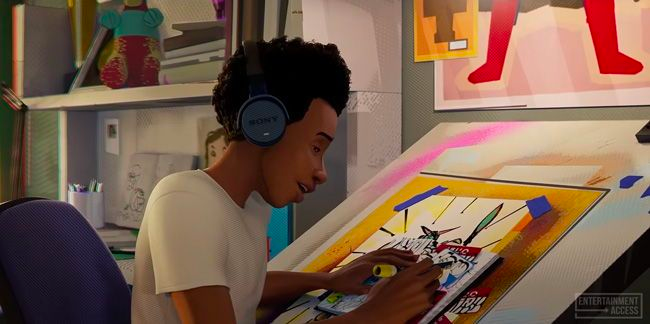
This film falls into a few audience the audience reception theories mentioned above, one obviously being the Uses and Gratifications Theory however another being Reception Theory. Uses and Gratifications Theory is in the film in many forms, for example, it could be used for diversion, or personal identity and relationships. An example of Reception theory could be that because of the fact the film is set in New York but in a different universe to ours, there are many advertisements on vehicles and billboards that represent and have the same features as brands in our universe but are slightly different so the audience knows exactly what is meant by these details. This could also possibly fall into the Hypodermic Needle Theory too, as some of these easter eggs will automatically be registered to us as the brands and companies we know even though It does not actually say that and when we find out that it doesn't we are forced to remember them. There are also many hidden advertisements of Sony's products within the film which also falls into the Hypodermic Theory.
Here are a couple of examples of what I am talking about below:

A truck that has a logo reading 'RedEx' - representing the brand and logo 'FedEx' but with the colours swapped around.
A billboard that states 'Koca-Soda', obviously representing the well known drink 'Coca-Cola'

Our main character wearing Sony's wireless headphones and singing in the very first scene.
Breaking Bad.

Breaking Bad is an 18 rated TV show and is extremely different to the other two media projects I have discussed. The show is rated 18 because of it featuring topics such as drugs, crime, violence, gore, bad language etcetera, the main theme of the show being drugs. The genre is crime, drama, thriller and dark comedy- a big contrast to the other projects I have spoken about.
There are lots of codes and conventions to spot in the show and the show even has it's own colour theory which I have spoken about previously on my website under my Jesse Pinkman Illustration on my Projects Page. This is a good website which explains their colour theory in detail:
One code outside of the colour theory however, could be for example within the sound. Sometimes, when a character feels overwhelmed or if it is a tense moment there will be a static, or a kind of ringing sound, which conveys the character's intense feelings well to the audience. In addition to this, the show also sometimes breaks conventions however this is done in a way that makes things extremely effective. Unlike the previous projects I have spoken about, Breaking Bad often actively will not include tense music in intense scenes or emotional music in emotional scenes, this is because when this convention is broken for a show as action packed as this one, it actually somehow makes these scenes more tense as they end up seeming more real to the audience.
This show falls into The Uses and Gratifications Theory and is, similarly to my pervious topic, mostly within the sectors of: diversion, personal identity and personal relationships.
Task 2.
For this task, I am required to use two examples of my own work that I have done while on this course and evaluate and explain the contextual parameters of each piece of work [Genre, Audience, Content, Narrative and Structure] and use critical perspectives [theories] to explain the structure and content of your work. You might refer to representation, audience reception theories, or codes and conventions.
Animal Typography Poster - Project 5.

For this project, we were tasked to create a poster for Yorkshire Wildlife Park. I did a large amount of research for this project trying to figure out which of the above listed I needed to include.
Contextual Parameters.
Genre/Style.
After looking through sites such as Pinterest for inspiration and ideas, I decided that I wanted my poster to be of a more illustrative style in order to stray away from the design approach that the wildlife park already have for their current posters and to experiment and explore with something completely different.
Audience.
The first thing I did when starting this project is I put pen to paper and started to make notes on the type of audience that the poster would be aimed at. The audience is one of the main things to be focused on at the beginning of designing any media product as this is how you are going to gain the interest of more people.
The conclusion I came to is that Yorkshire Wildlife Park is a pretty age neutral place and while a lot of customers are most likely parents/carers who want something fun to do on a day out with the kids, that would still mean that my poster should remain suitable for all ages as I am trying to draw in the attention of both adults and children. With this information, I made the decision to do the following:
- Make it so that the poster can be eye catching for anyone.
- Make sure that the text is of readable size for anyone.
- Use effective but minimal colours.
Content.
After establishing the type of thing I needed to do, I moved on to listing possible ideas of what type of animal to make my poster about. I eventually came down to the idea of the leopard as I knew that from visiting Yorkshire Wildlife Park the leopards have quite an interesting enclosure and climbing frame, and people often go there to watch the leopards use it. In addition, when thinking of ideas I tried to think of inventive ways I could use typography in words and eventually decided that the word 'climb' would be most interesting to work with.
There are also specific reasons as to why I illustrated the leopard in these different styles and from these different perspectives etc. and this was because I wanted there to be some depth within the poster and I used different levels of detail and illustration to convey this: I drew one leopard as a silhouette and further away - climbing on a branch - and the other leopard is more close up and has much more detail which allows the audience to more identify what the creature is. In summary, the leopard far away and on the branch establishes the event and the 'why' of the poster, telling the audience why they should come, and the detailed and close up leopard establishes the 'what'.
To add to this, I also chose to work with this colour palette not only because it harmonises and works well together but because of the conventions - the colours of the desert sand and the sky are represented and this is typical of a leopard and it's habitat.
Structure.
As can be seen, in my poster the text that explains the event starts from the bottom of the page and the lettering for the word 'climb' works its way upward. The reason it is structured like this is because I wanted the lettering to represent what it says. It is climbing upward toward the branches, as are the leopards at the wildlife park.
Jesse Pinkman Illustration - Colour Theory - Project 1.4

For this project, we were tasked to research deeper into colour theory and to come out with a final illustration we had created using this knowledge. As someone who is mostly focussed on the art and drawing side of creative media, this was right up my street and I really enjoyed this project.
Genre/Style.
Much like the previous illustration topic that I talked about in this part of the blog, I used Pinterest for inspiration. I looked at a lot of photos of the character and wanted to choose one that had a good amount of detail and also personality as I wanted my illustration to be in more of a detailed, semi-realistic monochrome style. I also looked at the work of an artist - Malika Favre for inspiration as the style was going to be relatively similar to hers as she uses colour theory to pull her illustrations together.
Audience.
For this piece in particular I did extra research on the 'Colour Theory behind Breaking Bad' as the character is from that show. When researching this I was considering my audience because if this Illustration was made to be a poster, the only people that would know what the meanings behind the colours are.
This means that the audience would most likely be people that are 16 upwards, due to the age rating of the show and from seeing that people around me my age have watched it, therefore I chose one of the most loveable characters according to the wide range of an audience and made sure to represent him well with lots of detail.
Content.
This piece features the well loved Breaking Bad character Jesse Pinkman, he is illustrated in red and is in a monochrome style. The smoke from the cigarette he is smoking is yellow and the background is blue. I chose these colours for many reasons, some are to do with the colour theory in the show however a lot of it is to do with colour theory in the real world and what the colours represent. This illustration features a 'triadic' colour scheme which means three colours that are spaced evenly on the colour wheel, these colours therefore harmonise and go together extremely well.
Structure.
I wanted this illustration to be eye catching and therefore positioned the character to fill most of the canvas. I wanted it to be clear who the illustration was of therefore he is close up, mostly in the centre and takes up the most space in the image as he is the subject.
I drew the smoke flowing into the blue background due to the colour symbolism that the show has. You can read more about this piece in my blog titled: "Colour Theory Project"


Comments