Understanding Camera Angles, Cuts and Transitions.
- Mylo Sayles
- Nov 29, 2022
- 7 min read

Updated: Dec 7, 2022
(Project 4.3)
Camera Angles.
Why is using different camera angles important?

Perspective.
By shooting from different angles you can help the audience understand a scene better and allow them to feel more connected to it.
Emotion.
Different camera angles can help emphasise and convey different emotions that people or characters are experiencing. They have the power make a scene more intense, emotional and more.
Editing.
Shooting different angles of a scene can help a whole lot when it comes to editing because then you are able to choose which shots are best for your scene and make more thorough decisions later on and tell a better story.
What are the twelve most popular camera angles?
Wide Shot.

A wide shot is usually captured on a wide angle lens. It allows the audience to see more of the surroundings and is more used to establish a setting / location. It also helps them to put themselves more into the character's shoes and can convey various emotions.
The scene pictured above is from a movie called 'The Martian' and the plot is centred around an astronaut on a mission with his crew to Mars. However upon landing on the planet, there is a severe storm and crew member [Mark Watney] gets swept away and left on Mars for dead. Mark survives and is alone on an entire planet for 549 Sols [Equal to 564.09 Earth days].
This is relevant because this shot, similar to many other shots in this movie, conveys emotion because it emphasises how alone he is and reminds us of the fact that the astronaut literally has a whole planet to himself which makes us wonder how lonely and isolating that must feel.
Long Shot.

In a long shot, the complete subject is visible usually and mostly from head to toe and the subject is positioned in relation to their surroundings. It is slightly different to the wide shot as a long shot has stronger focus on the character(s) while showing the background, the character is usually in the centre of the shot. The two are not shown as equals in the scene.
This scene is of a character called 'Thor' who is a superhero and a Greek god. The shot shows his full body and is also being shot from a low angle, therefore conveying his power to the audience.
Medium Shot.

The medium shot [often also called a mid-shot or waist shot] is a film shot that stretches from around the waist [or sometimes the knees] of a subject up to their head. It is used to emphasise the character and their surroundings while also being close enough so the viewers can read the character's emotions.
In this scene, two characters are having a conversation about something that had happened the night before. It is a relatively serious conversation so they are trying to be subtle. The medium shot angle helps to get this message through because we are close enough to see their facial expressions, their body language and the, inconveniently for them, busy setting.
Cowboy Shot.

It is helpful to think of a cowboy shot as the middle ground between a medium shot and a wide or full shot. A cowboy shot includes the subject's face down to their mid-thigh. This shot size was widely used in Western films like Clint Eastwood's 'A Fistful of Dollars' based on the frequency of showdowns in these flicks.

This shot however is now also used in other scenes to recreate that same vibe of these 'showdown' scenes. In this scene to the right, the heroes are about to face an enemy, therefore this angle adds effect in a similar way to the older western films.
Close Up Shot.
Close up shots are typically used to express a significant emotion or to emphasise something important within a scene as the camera is zoomed in close on a subject or more often than not a character's face to show their emotions.

This shot to the left is a close up of a significant object in the show 'Breaking Bad'. When these close ups in the show begin, It creates mystery and confusion as at that point in the show the significance of this object is unknown.
The close ups increase as the show goes on and it is eventually revealed just how important the object is and its true meaning becomes apparent.

Another example of a close up shot is the one on the right. It allows us to see the emotion on the character's face and the detail too.
In this scene to the right, the characters featured are getting high and their heightened emotions and mood swings can be seen switching across their faces. After this scene, the angle switches to a medium shot and it is revealed that the characters are hallucinating and their experience is not as intense as it seems when close up. This is because of the outside kind of perspective the medium shot provides in contrast to the close up, which feels very different.
Detail / Extreme Close Up Shot.
An extreme close up or detail shot, hence its name, is used to capture the maximum amount of detail. These shots will most likely [Much like the close up shot] focus on significant objects or people's expressions or faces and can therefore convey things like emotion, intensity of a scene, importance etc. A detail shot is much closer, however, than a close up shot.
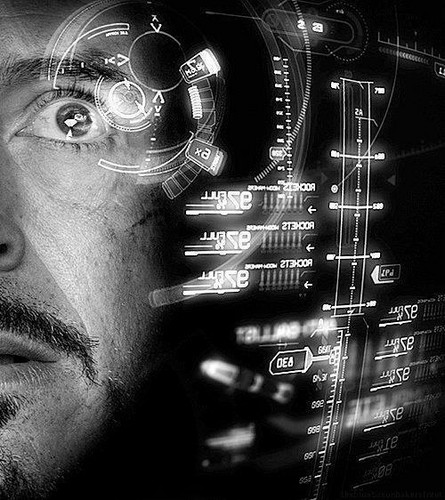
The shots below are examples of an extreme close up.
It can immediately be seen the emotion on the characters face. The scene below radiates extreme sadness and the scene to the right seems intense. It helps the audience see what kind of battle their favourite characters are fighting, bringing out emotion from them too.

Low Angle Shot.
As briefly mentioned before, the low angle shot radiates power, like in photography, it makes the subject seem taller, perhaps more intimidating and also much more capable and confident. This angle may be used for heroes, or villains within storytelling to make them seem powerful, in control or, particularly if the camera is focused on a villain at this angle, to make the viewers feel somewhat insignificant.

In the scene above, the Avengers have their enemy surrounded. This not only shows the powerfulness of the heroes and therefore powerlessness of their enemy, it also puts the audience into the villain's point of view as it is showing us what it would probably look like from their perspective.
High Angle Shot.

A high angle shot looks down at a subject from a higher point of view. It is often used to suggest a lower level of importance or power or more like in the scene to the left, to enhance storytelling, narrative information, and putting things into perspective.
In this scene from 'Deadpool', the high angle is used to give the audience perspective and emphasise how high up he is on the overpass. His legs hanging over the side suggest that he is unbothered by the dangers which already in this very early scene suggests the character holds quite a lot of power.
Dutch Angle Shot.
The Dutch angle is an angle used to create an uneasy atmosphere, to give the audience a creeping sense of dread and the incline that something is very wrong.
This scene in Netflix show 'Stranger Things' has an extremely creative way they use the Dutch angle shot.

The two characters [Johnathan Byers and Nancy Wheeler] are employed as journalists for a local newspaper and are trying to let their boss know that something is suspicious and possibly dangerous within a story they are following. However, he refuses to listen and gets angry at the two of them for telling him what he should be doing within his job.
The shift into the Dutch angle here is what is extremely creative. When the boss kicks the chair, the camera abruptly falls into the angle, therefore marking this scene as significant. It shows uneasiness, danger and possibly defeat for Johnathan and Nancy as their task is going to be much harder if nobody believes them or will listen. From the moment he kicks the chair the audience know that they should be on edge.
Over The Shoulder.

The over-the-shoulder shot is a camera angle used in film and television, where the camera is placed above the back of the shoulder and head of a subject. This shot is most commonly used to present conversational back and forth between two subjects.
In this scene a relatively serious and intense conversation takes place, and the back and fourth between the characters allows us to experience the emotions the characters are feeling on both sides of the argument/conversation.
Point Of View [POV] Shot.
The POV shot is designed to literally put viewers into a characters shoes. It does this by showing what the character is looking at. The camera is placed at eye-level to the character and their face cannot be seen unless they are standing in front of a reflection, much like the example below.

In this scene, Spider-Man is taking on a villain who makes him feel delirious and confused by manipulating him, there is a lot of emotion within the scene and the POV shot adds a large amount of effect and enhances the feelings the character is experiencing by allowing the viewers to see the events unfold through his eyes.
Cutaway Shot.
A cutaway shot is a shot that "cuts away" from the main action to another that adds visual information, it then returns to the original shot with new meaning.
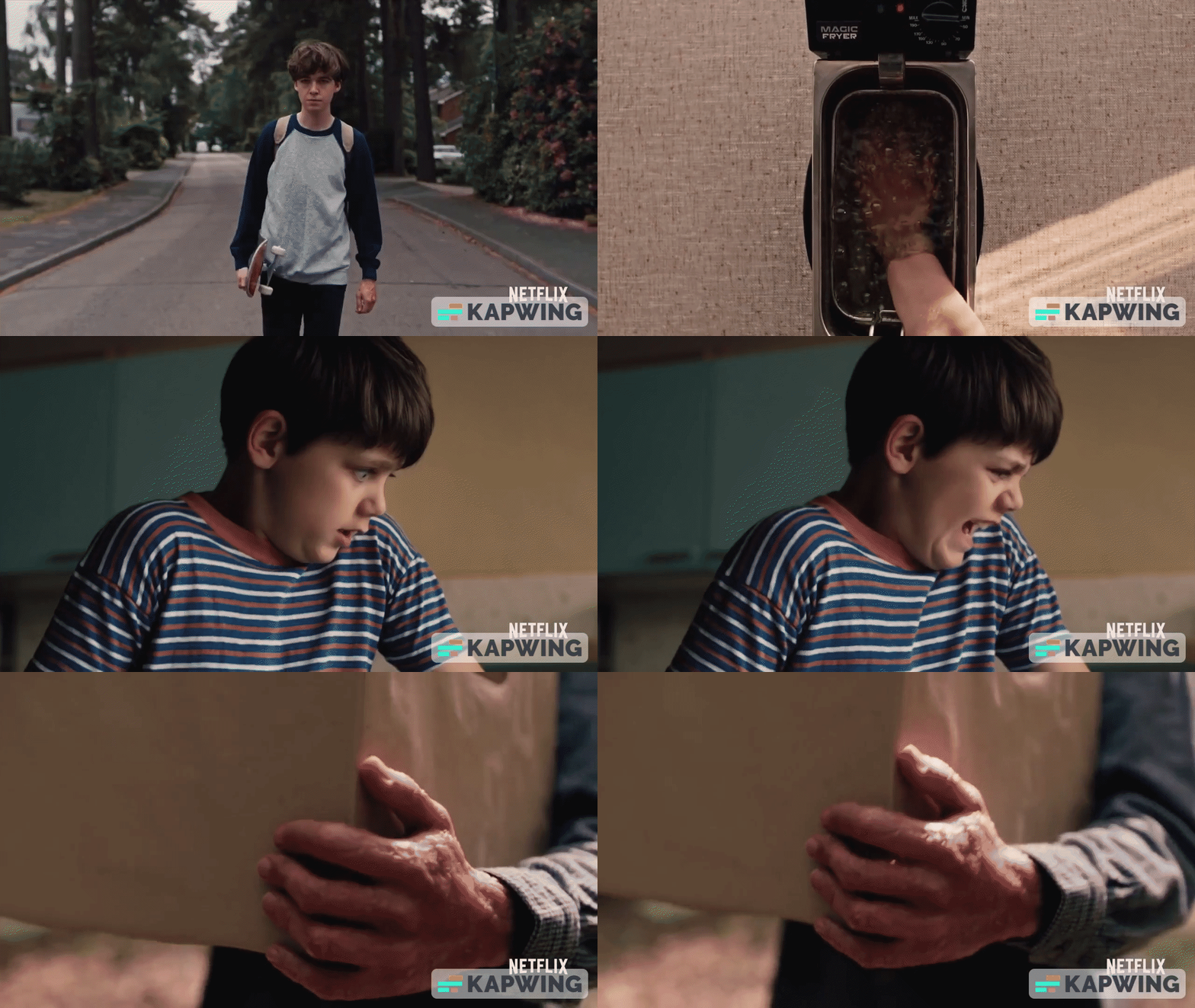
This scene for example, uses a cutaway to show how a character ended up a certain way / in a certain situation. It is a good way of storytelling especially when things such as flashbacks are being used like in this example from the show 'The End of the Fxxxing World'.
Cuts & Transitions.
Standard Shot.
The standard shot is just simply editing two clips together.
Jumpcut.
A jump around scene often used to speed up time in a scene usually consists of one long shot and then cut out spaces and editing the remaining footage all together into one piece. Edgar Wright [talked about in one of my previous blogs] is quite well known for using this style of editing.
J-Cut.
Leading into the next scene with the audio. It allows audience know what's going to happen next. dragged audio clip of next clip onto tail of current clip
L-Cut.
Audio from current clip overlaps into next clip, good for conversational themes
Cutting on action.
A cut when a character moves a certain way, allows audiences eyes to stay on the action and follow what is happening better.
Crosscutting / Parallel Editing.
Parallel scenes mean two narratives are playing out at the same time. There often will be alternations between two characters to show what they are doing at the same time as each other.
Cutaways.
A shot that cuts away from the main action or scene and then shows something additional that adds context or information. [see above for example].
Montage.
Sequences, light jumpcuts over an extended period of time over different locations.
Matchcut.
Matching a characters actions into the next scene.
The 180 Degree Rule.
According to the 180-degree rule two characters (or more) in a scene should always be in the same left/right connection with one another.

You must attempt to keep your camera(s) on the same side of a 180-degree imaginary line that you create between these two characters (or subjects) in order to stick to the guideline.


Comments